
Is Inversion Therapy for Back Tension Worth It?
Back tension often builds slowly. It can start with long hours at a desk, hard workouts, stress that settles into your shoulders and spine, or the kind of daily movement patterns that leave your low back feeling tight by evening. That is why inversion therapy for back tension gets so much attention - it offers a simple, drug-free way to reduce compression, encourage relaxation, and help your body reset.
For many people, the appeal is immediate. You are not forcing a stretch or pushing through pain. You are changing your position and using gravity to create a gentler kind of decompression. That can feel especially helpful when your back seems heavy, compressed, or stubbornly tight rather than sharply injured.
How inversion therapy for back tension works
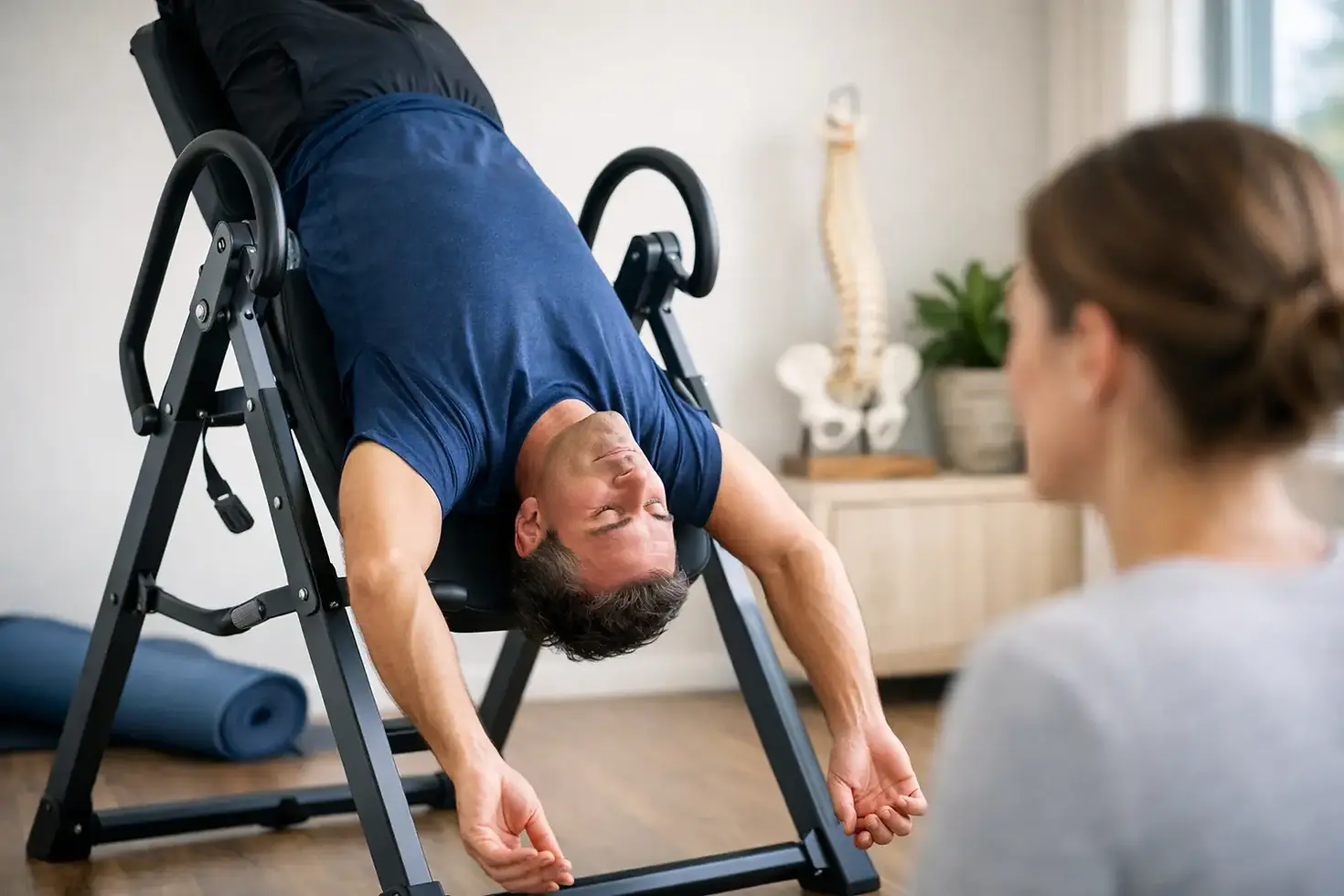
Inversion therapy involves reclining backward at an angle so your body is partially or fully inverted, usually on an inversion table. As your head moves below your heart, gravity shifts the load on your spine and joints. The goal is to temporarily reduce pressure, create space through the spine, and let surrounding muscles release some of the guarding they may be holding.
When back tension is tied to compression, posture fatigue, or muscular tightness, that change in angle can feel relieving. Some people describe a gentle lengthening through the low back. Others notice less pulling in the hips, a lighter feeling in the spine, or a broader sense of relaxation through the back body.
That said, inversion therapy is not magic, and it is not the right fit for every kind of discomfort. If your tension is driven mainly by inflammation, instability, or an underlying medical condition, the response may be limited or inconsistent. The value often depends on the cause of the tension, how intensely you invert, and whether you use it as part of a broader wellness routine.
What inversion may actually help you feel
The biggest reason people try inversion is straightforward - they want their back to stop feeling tight. In many cases, inversion can help by reducing the constant downward pressure that builds through the spine during standing, sitting, lifting, and training.
That decompressed feeling may support several short-term benefits. Muscles around the low back may relax when they no longer feel the same compressive load. The hips may feel less restricted. Some people also notice that their breathing becomes easier during a session, which can lower overall body tension and help shift the nervous system out of a braced, stressed pattern.
This is one reason inversion often pairs well with other recovery-focused services. If you are already managing stress, muscle fatigue, or posture-related discomfort, inversion can complement massage, bodywork, red light therapy, or compression-based recovery by addressing a slightly different layer of the problem. Rather than working only on the muscles, it may help change the mechanical pressure those muscles are responding to.
When it tends to work best
Inversion therapy is often most useful for back tension that feels mechanical. That includes stiffness from desk work, mild low back tightness after exercise, pressure from prolonged standing, or general spinal fatigue that improves when you lie down and worsens when you have been upright too long.
It may also be appealing for active adults who want a recovery tool that feels restorative without adding impact. If your routine already includes strength training, running, cycling, or physically demanding work, inversion can offer a low-effort way to support decompression between harder days.
The best results usually come from consistency and moderation. A short session at a gentle angle often feels better than forcing a dramatic inversion. More is not always better. If you go too steep too fast, your body may tense up instead of letting go.
What to expect during a session
A good inversion session should feel controlled, supported, and calm. Most people do not need to hang completely upside down to notice benefits. In fact, partial inversion is often enough for back tension. A modest angle can still reduce pressure and allow the spine to unload without creating an overwhelming sensation.
In the first minute or two, you may notice a shift in circulation and body awareness. After that, many people begin to feel their back muscles soften. The key is to avoid straining, swinging, or trying to turn the session into an aggressive stretch. Gentle movement, steady breathing, and a comfortable angle tend to work best.
After returning upright, it is common to feel lighter through the back or taller through the torso. Some people feel immediate relief. Others notice subtle improvement over the next few hours. Like many wellness therapies, the response can be individual. One person may love it from the first session, while another needs a few carefully paced sessions to decide if it helps.
When to be careful with inversion therapy for back tension
Even though inversion is noninvasive and drug-free, it still changes pressure in the body. That means it is not appropriate for everyone. People with high blood pressure, glaucoma, certain heart conditions, retinal issues, osteoporosis, recent surgery, hernias, or pregnancy should generally avoid inversion unless a qualified medical provider says it is safe.
It is also worth being cautious if your back tension comes with numbness, radiating pain, severe weakness, or sharp symptoms that are getting worse. Those signs suggest you may need a proper evaluation before trying a decompression-based approach.
There is also a comfort factor. Some people simply do not enjoy the feeling of being inverted, especially if they are prone to dizziness, anxiety, or motion sensitivity. That does not mean recovery tools are off the table. It just means a different modality may be a better match.
Inversion as part of a larger wellness plan
Back tension rarely has just one cause. For some people, it is postural. For others, it is stress-related, activity-related, or tied to recovery habits that are not quite keeping up with daily demands. That is why inversion often works best when it is not treated as a one-time fix.
A more complete approach might include regular bodywork, mobility work, hydration, stress support, and recovery therapies that help both muscle tension and systemic fatigue. If your back tightness spikes during stressful weeks, calming the nervous system matters. If it shows up after workouts, circulation and tissue recovery matter. If it builds after long periods of sitting, movement habits and decompression both matter.
This broader view is where a wellness-centered setting can be especially helpful. At Synergy Wellness Center, inversion therapy can fit naturally into a plan that supports relaxation, recovery, and feeling better overall rather than chasing symptoms one at a time.
Is it worth trying?
If your back feels tight, compressed, or fatigued more than acutely injured, inversion therapy may be worth exploring. It is especially attractive for people who want a supportive, non-pharmaceutical option and appreciate therapies that feel both restorative and practical.
The trade-off is that it is usually a management tool, not a cure. It can create relief, support decompression, and help your body unwind, but it works best when matched to the right type of tension and used thoughtfully. Some people feel a clear difference quickly. Others benefit more when inversion is combined with massage, recovery therapies, or a consistent self-care routine.
A good first step is keeping expectations realistic. You are not looking for a dramatic fix in one session. You are looking for signs that your body responds well - less tightness, easier movement, reduced pressure, or a greater sense of ease through the spine.
If that sounds like what your body has been asking for, inversion may be a simple place to start your journey toward feeling your best. Sometimes relief begins with giving your back a chance to let go.


Comments