
Compression Boots vs Massage: Which Helps More?
- Brad Engh
- Jul 4
- 6 min read
A hard workout, a long week at your desk, or one bad night of sleep can leave your body feeling heavy, tight, and worn down. When people compare compression boots vs massage, they are usually asking a simple question: what will help me feel better faster?
The honest answer is that both can be excellent, but they do different jobs. One is technology-driven and rhythmically supports circulation. The other is hands-on, personalized, and often better for tension patterns that need human assessment. If you are choosing between them, the best fit depends on what your body is asking for right now.
Compression boots vs massage: the core difference
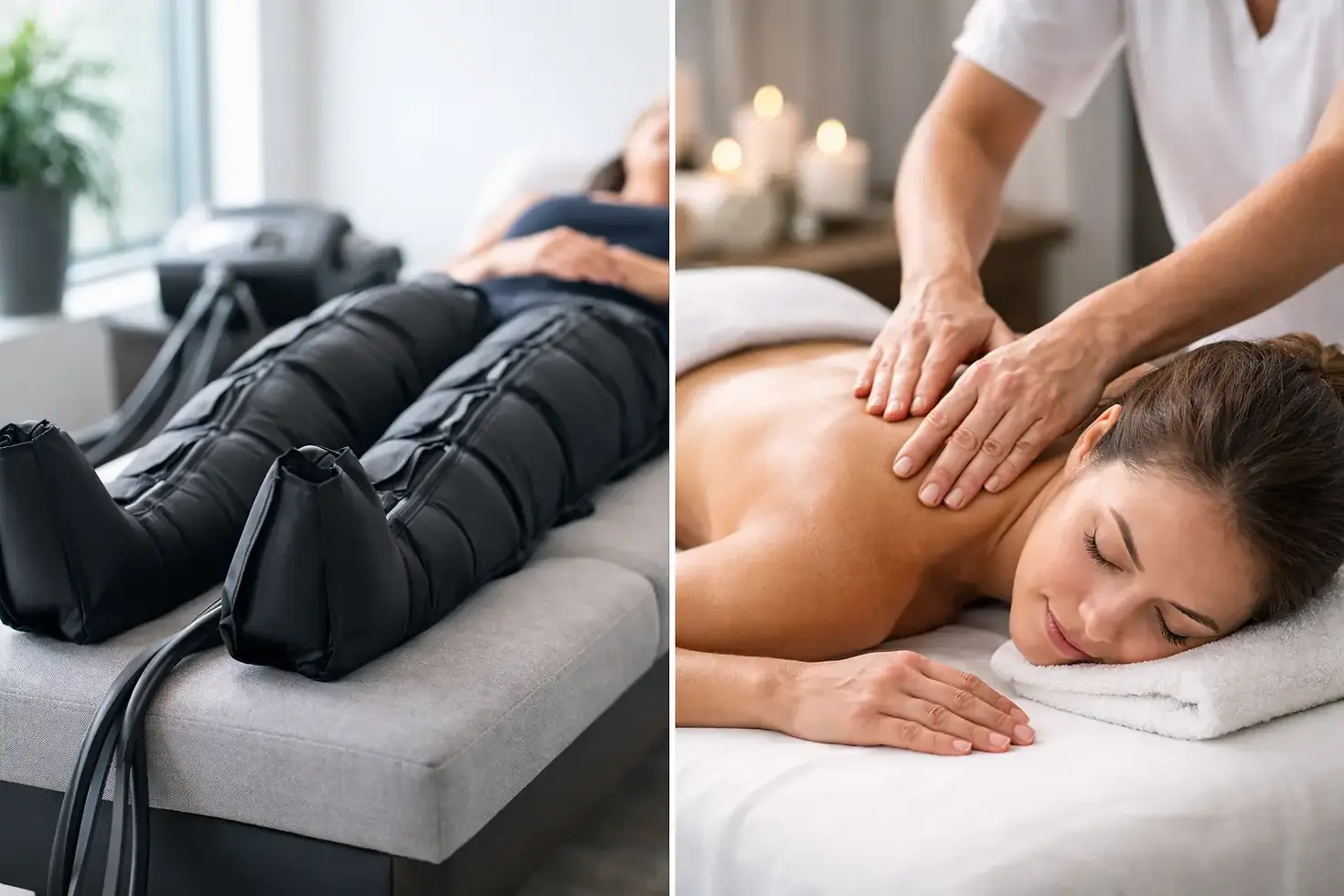
Compression boots use controlled air pressure to gently squeeze the legs in cycles. That pressure typically moves from the feet upward, supporting circulation and helping the body manage post-exercise heaviness, mild swelling, and tired legs. The experience is passive. You lie back, relax, and let the session work.
Massage is more adaptable. A trained practitioner can respond to what they feel in your muscles and connective tissue, adjust pressure, and focus on specific areas that need attention. Massage can support circulation too, but it also addresses tissue quality, stress holding patterns, and the nervous system in a way compression boots cannot fully replicate.
So if you want a quick comparison, compression boots are great for mechanical recovery support, while massage offers broader hands-on care.
When compression boots may be the better choice
Compression boots tend to shine when your legs feel fatigued, swollen, or sluggish. Runners, cyclists, strength athletes, people on their feet all day, and travelers often like them because the treatment is simple and targeted. If your main complaint is lower-body fatigue rather than a complicated pain pattern, boots can be a very practical option.
They are also appealing for people who want consistency. A compression session is standardized. The pressure cycles are designed to be repeatable, so your experience from one visit to the next is fairly predictable. For some clients, that matters. You know what you are getting, and you can fit it into a busy schedule without much mental effort.
Another advantage is comfort level. Some people do not want deep pressure, especially when they are already sore. Compression therapy can feel soothing without the tenderness that sometimes comes with deeper bodywork.
That said, compression boots are limited by design. They are usually focused on the legs and do not identify why a certain area feels off. If your discomfort starts in the hips, low back, or posture, the boots may help you feel refreshed without fully addressing the source.
Best uses for compression boots
Compression boots are often a strong choice after intense leg training, long shifts, hiking, travel, races, or any day when your lower body feels overworked. They can also fit well into a general wellness routine if you like low-effort recovery support that helps you reset.
When massage may be the better choice
Massage is often the better fit when the problem is more specific than general fatigue. If you have knots in your shoulders, tightness through the hips, neck tension from stress, or a low back that always seems to lock up, massage usually offers more value.
That is because massage is responsive. A therapist can work around old injuries, notice asymmetry, and adapt the session to what you need that day. One appointment might focus on calming the nervous system and helping you unwind. Another might target overused muscles and restricted movement.
Massage also carries a different emotional and neurological effect. Human touch can help the body shift out of a stressed, guarded state. For many people, that matters just as much as the physical work. If your body tension is tied to stress, poor sleep, or feeling overstimulated, massage often supports deeper relaxation.
There are trade-offs here too. Massage usually requires more input, more communication, and sometimes more recovery afterward, especially if the work is deeper. It can also be more targeted, which is a benefit, but not always what someone wants after a demanding day. Sometimes a person does not want problem-solving. They just want relief that feels easy.
Compression boots vs massage for soreness and recovery
If your goal is recovering from exercise, both options can help, but not in the same way.
Compression boots are often helpful for that heavy-legged feeling after training. They can support circulation and leave your lower body feeling lighter and less congested. Many active adults like them the day after hard effort, especially when they still want to stay mobile without adding more strain.
Massage can help with soreness too, but its strength is broader. It may improve comfort, mobility, and tissue tension beyond the calves and quads. If your workout soreness is mixed with tight hips, a stiff back, or upper-body overload, massage can address more of the picture.
If soreness is mild and mostly in the legs, compression boots may be enough. If soreness is paired with restriction, imbalance, or recurring tension, massage is often the stronger choice.
Which is better for circulation?
This is one area where compression boots have a very clear identity. Their main job is rhythmic pressure that supports fluid movement through the legs. That makes them especially appealing for people who sit for long periods, stand for long periods, travel often, or notice lower-leg heaviness.
Massage can also support circulation, but it is not as narrowly focused on that single mechanism. With massage, the benefit comes as part of a bigger therapeutic effect. You are usually getting muscular work, relaxation, and individualized attention at the same time.
If your main priority is circulation support in the legs, compression therapy often makes more direct sense. If your circulation concerns are tied to overall tension, stress, and restricted movement, massage may provide a more complete answer.
Which is better for stress relief?
Massage usually wins here.
Compression boots can be deeply relaxing, especially in a calm wellness setting, but their strongest value is physical recovery support. Massage tends to create a fuller mind-body experience. The room, the pace, the hands-on care, and the personalized attention all help many people settle their nervous system more completely.
For someone carrying stress in the neck, jaw, shoulders, and back, massage is typically more effective. For someone who feels mentally fine but physically drained in the legs, compression boots may feel like exactly the right kind of relief.
The best choice may be both
This is where the conversation gets more useful. Compression boots vs massage does not always need to end with a winner.
Many people benefit from using both at different times. Compression boots can be a great addition to a regular recovery routine because they are easy, comfortable, and effective for lower-body fatigue. Massage can be layered in when your body needs hands-on assessment, focused bodywork, or a deeper reset.
That combination makes sense for active adults, busy professionals, and anyone trying to stay ahead of stress and pain rather than waiting until things get worse. In a wellness center that offers both technology-based and practitioner-led care, you are not forced into a one-size-fits-all answer. You can match the service to your body, your schedule, and your goals.
How to decide what to book first
If you are unsure where to start, think about your main complaint.
Choose compression boots first if your legs feel tired, swollen, heavy, or slow after workouts, workdays, or travel. They are also a smart entry point if you want a simple, noninvasive session with no guesswork.
Choose massage first if you have localized pain, recurring tightness, stress tension, headaches related to muscle strain, or areas that clearly need skilled attention. It is also the better option if your symptoms move beyond the legs.
If your needs are mixed, it can help to think in terms of timing. Compression may be ideal for regular maintenance between harder weeks. Massage may be ideal when something feels stuck, persistent, or more complex.
For clients in La Crosse looking for practical, drug-free support, having both options available in one place can make recovery easier to maintain. You do not have to choose a philosophy. You can choose what works.
Your body does not always need the same kind of care every week. Sometimes it needs circulation support and a chance to recharge. Other times it needs skilled touch, targeted attention, and space to fully let go. The right choice is the one that helps you keep moving, keep recovering, and keep feeling your best.


Comments