
Brainwave Entrainment for Relaxation Explained
Your body can be physically still while your mind keeps running through tomorrow’s schedule, a difficult conversation, or the list of things left undone. Brainwave entrainment for relaxation offers a guided way to shift out of that high-alert mental pace using carefully timed light and sound. It is not about forcing your mind to go blank. It is about giving your nervous system a calmer rhythm to follow.
At Synergy Wellness Center, neurovisual brainwave entrainment is one of several drug-free, noninvasive wellness options that can complement massage, Reiki, vibroacoustic therapy, and other restorative services. For people who feel worn down but cannot seem to settle, a session can create intentional space to pause, recharge, and reconnect with a more relaxed state.
What Is Brainwave Entrainment for Relaxation?
Brainwave entrainment uses repeated sensory patterns, typically sound, visual pulses, or both, at a selected pace. The brain naturally produces electrical activity in different frequency ranges throughout the day. Alert problem-solving tends to look different from daydreaming, deep relaxation, or sleep.
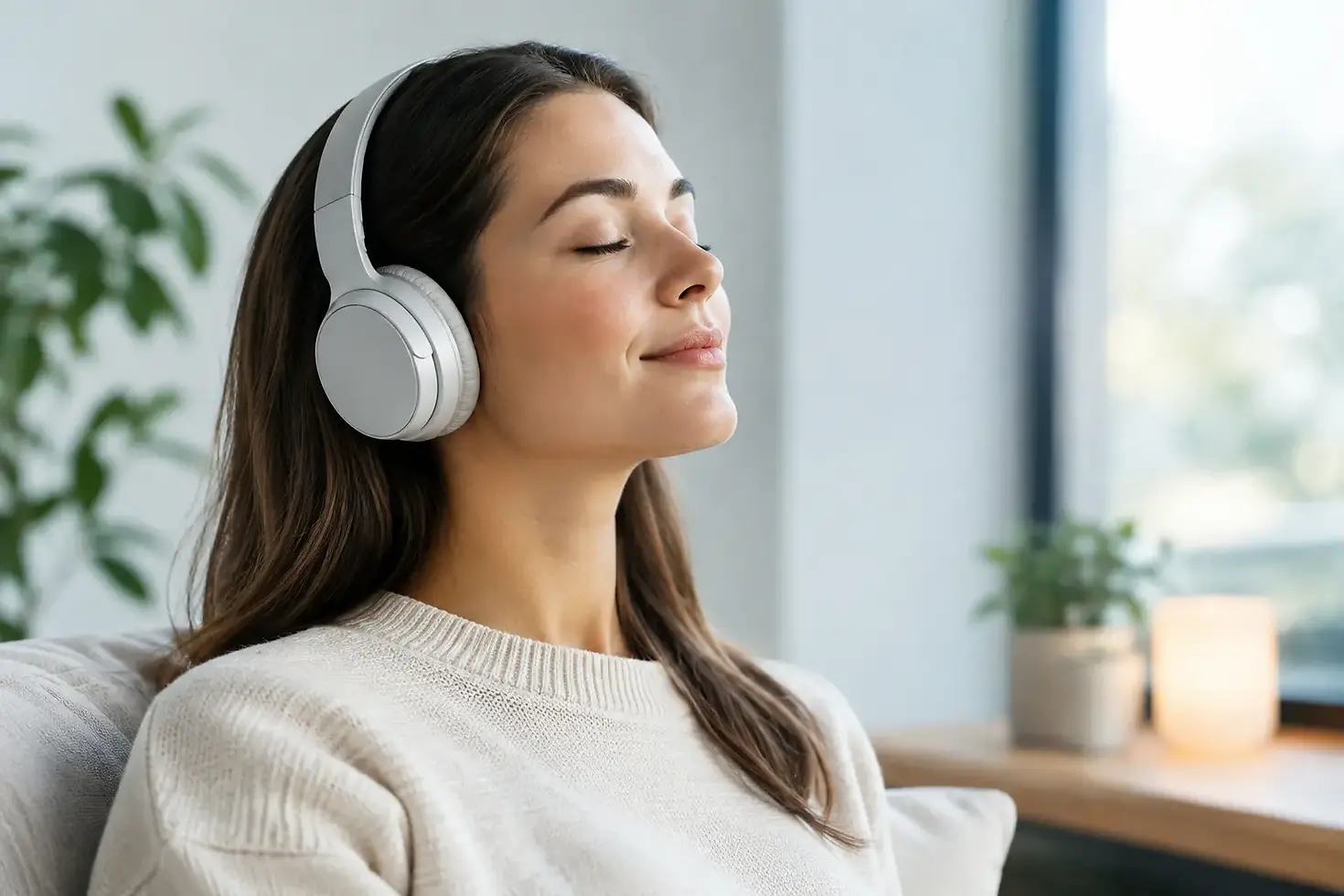
During a neurovisual session, you may wear comfortable glasses that deliver gentle light patterns while listening to corresponding audio through headphones. The selected rhythm is designed to encourage the brain toward a slower, more restful pattern. You remain in control and awake unless you happen to drift off, which some clients do when they finally have permission to rest.
Relaxation-focused sessions commonly emphasize alpha and theta ranges. Alpha activity is often associated with a calm, awake state, like the quiet exhale after you finish a demanding task. Theta is commonly connected with deeper relaxation, meditation, imagination, and the drowsy transition before sleep. The experience is personal: one person may feel mentally clear and peaceful, while another notices heavy limbs, a softer jaw, or a welcome break from racing thoughts.
Why a Guided Rhythm Can Feel So Restorative
Stress asks the body to stay ready. That response can be useful during a short-term challenge, but it becomes draining when deadlines, workouts, caregiving, pain, poor sleep, and constant notifications leave little room to come down. Relaxation is not simply a luxury in that cycle. It is part of recovery.
A brainwave entrainment session provides a structured environment with fewer decisions to make. Instead of wondering whether you are meditating correctly or trying to quiet your thoughts through willpower, you can recline, breathe naturally, and allow the programmed audio-visual rhythm to lead the experience. For many people, that simplicity is a major benefit.
The results may also extend beyond the session in practical ways. When you feel more settled, it can be easier to transition into an evening routine, approach a massage with less guarded tension, or take a more intentional break between work and home. These effects vary, and entrainment is not a substitute for medical or mental health care. Still, it can be a meaningful supportive tool within a consistent self-care routine.
What a Neurovisual Session Feels Like
Your first session should feel comfortable, not complicated. After getting settled, you will use the neurovisual equipment in a relaxed position. The light patterns are visible through closed eyelids, and the sound is designed to work with the visual pacing. You do not need to concentrate on the lights or analyze every sensation.
Some clients notice their thoughts becoming less sticky. Others become aware of how much tension they have been carrying in the shoulders, hands, or forehead. A few people find the visual experience surprisingly vivid, while others simply enjoy a quiet period without interruption. There is no single “right” response and no performance required.
It helps to arrive hydrated, wear comfortable clothing, and give yourself a few unhurried minutes after the session before jumping back into a packed schedule. If possible, avoid treating relaxation like another item to check off. Let it be a reset.
Pairing Entrainment With Other Wellness Services
Brainwave entrainment can stand alone, but it also fits naturally into a broader recovery plan. A client carrying stress-related muscle tightness may enjoy neurovisual relaxation before or after massage therapy. Someone whose training schedule leaves them feeling both physically fatigued and mentally overstimulated may pair it with compression therapy, PEMF therapy, or an infrared sauna session, depending on their goals and professional guidance.
The trade-off is that more is not always better. A full wellness day can feel deeply restorative, yet a shorter session that you can realistically repeat may serve you better than an occasional marathon appointment. The most effective routine is usually the one that fits your body, budget, and schedule well enough to become consistent.
Who May Benefit From a Relaxation-Focused Session?
Brainwave entrainment may appeal to working professionals who struggle to shift out of work mode, active adults looking for a dedicated recovery practice, and anyone who wants a screen-free way to slow down. It can also be a welcoming option for people who are curious about meditation but find it difficult to sit quietly without guidance.
That said, it depends on your preferences and health history. Some people prefer hands-on care, such as massage or Reiki, because physical touch helps them feel grounded. Others appreciate technology-based services because they offer quiet privacy and a repeatable format. Many people enjoy a combination of both.
Neurovisual entrainment is not appropriate for everyone. Flashing light may not be suitable for people with photosensitive epilepsy or certain seizure disorders. People with a history of seizures, significant neurological concerns, light sensitivity, or conditions affected by sensory stimulation should speak with a qualified healthcare professional before trying it. If you experience discomfort, anxiety, dizziness, headache, or visual disturbance during a session, stop and let the wellness team know.
Make Relaxation a Practice, Not a Last Resort
The value of a relaxation session is often less about one dramatic moment and more about repetition. Your nervous system learns from the conditions you create regularly. A weekly appointment, a calming evening walk, a consistent bedtime, or ten minutes without notifications can all reinforce the message that rest is safe and allowed.
Consider what tends to pull you out of balance. If your mind speeds up after work, schedule a session before the weekend rather than waiting until you are fully depleted. If intense exercise leaves you physically tired but mentally wired, build recovery into your training plan. If pain or tension makes it hard to settle, combine relaxation support with the hands-on or technology-based care that feels best for your body.
Brainwave entrainment is not meant to erase life’s demands. It can help create a calmer starting point from which to meet them. When you give yourself a dedicated window to slow down, breathe, and receive care, feeling better becomes something you practice - not something you postpone until stress makes the decision for you.


Comments